
Cooking Indian Food in a Dutch Apartment Without Upsetting the Neighbours
In short: Managing Indian cooking smells in an apartment starts with identifying the ventilation system and using the cooker hood properly. Keep the designed fresh-air supply and transfer routes open, clean or replace filters as instructed, and control frying heat. Do not seal ventilation gaps or disable extraction to contain the smell.
You should be able to cook a familiar dinner in your own home. Your neighbour should also be able to raise a concern without the conversation becoming a judgement about your food.
Between those two ordinary needs sits a practical problem: where does the cooking air go?
A different spice blend will not repair a blocked filter or a faulty shared duct. Start with the kitchen rather than changing the whole menu.
Why tadka and fried onions travel
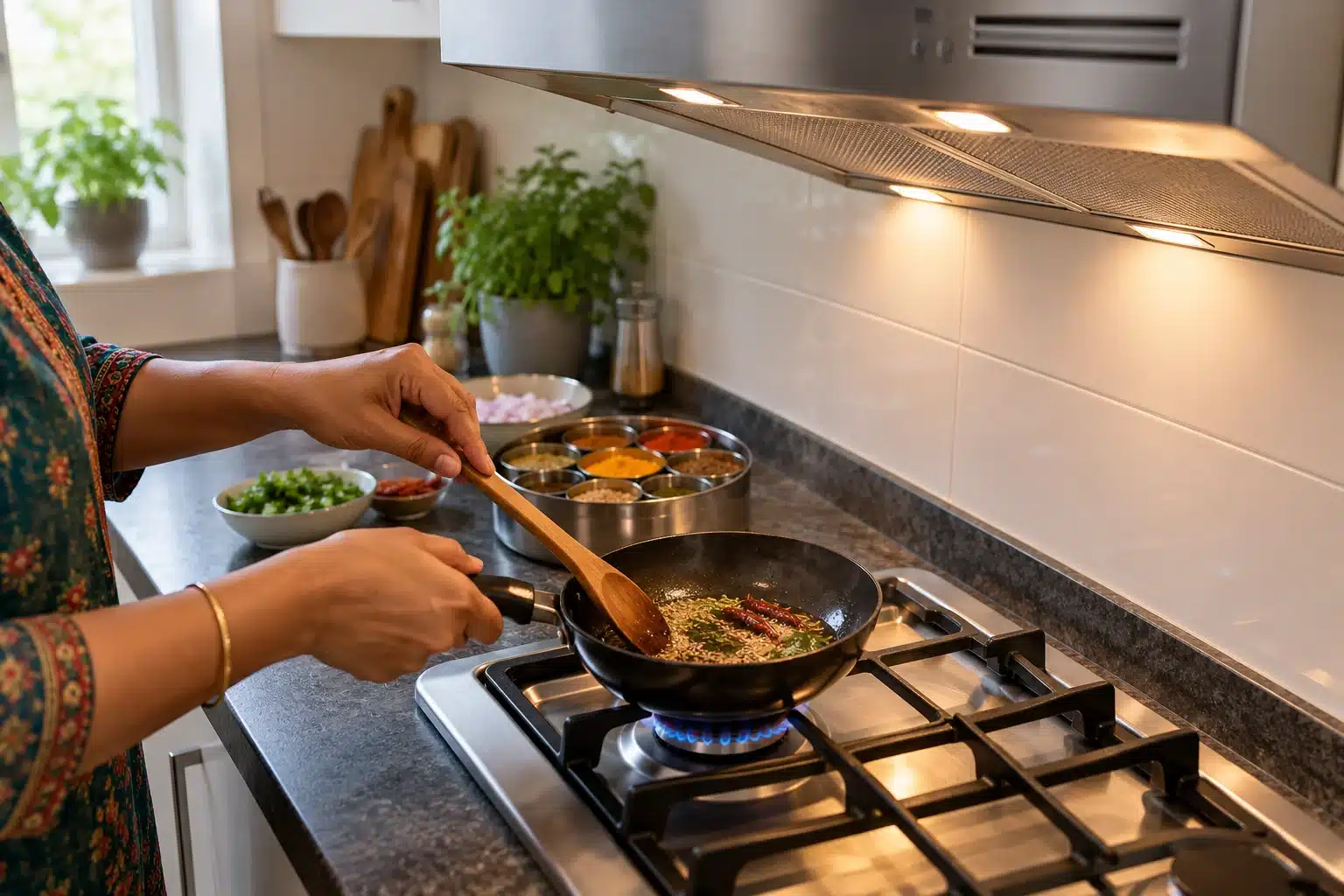
Tadka is the brief heating of spices in oil or ghee. Cumin, mustard seed, hing and other ingredients release a noticeable aroma during that stage.
Frying onions adds another concentrated burst. A curry simmering later may smell much less intense than the few minutes at the beginning.
The useful aim is to capture that burst near the hob.
Heat matters. A pan that is too hot can turn a fragrant tempering into smoke before you add the next ingredient.
Measure the spices and prepare the liquid or vegetables before heating the fat. Stay beside the pan.
If spices are burning, stop and start that small step again. A scorched base will not become pleasant because you have added more ingredients to it.
Find out which ventilation system you have
Look up the hood model or ask your landlord how it is connected. There are three common arrangements worth distinguishing.
- A ducted cooker hood sends air outdoors.
- A recirculating hood passes air through filters and returns it to the room.
- Central mechanical ventilation extracts air through vents in the home, often including the kitchen and bathroom.
Some apartments combine a recirculating hood with central ventilation.
These systems do different jobs. A recirculating hood does not provide the same outside-air extraction as a ducted one.
A ceiling vent is not a reason to ignore the hood over the pan.
Do not attach a powered extractor to a shared duct without the building manager’s approval. The approved arrangement matters to other homes as well as yours.
Fresh air needs a route in
Milieu Centraal advises keeping the ventilation system running and the designed air supply available.
Air needs to enter through the appropriate vents or windows and move towards extraction points. Gaps under internal doors may be part of that route.
Do not tape them shut to stop curry smells.
There is no universal rule that every window must stay closed whenever a hood runs. The right arrangement depends on the ventilation system.
Avoid a strong cross-draught across the hob if it pulls steam away from the hood.
Use the manufacturer’s instructions and ask the landlord if the extraction seems weak. Closing a bedroom door may limit direct drift, but it must not block the home’s designed ventilation.
That distinction is more useful than trying to make the flat airtight.
Build a repeatable cooking routine
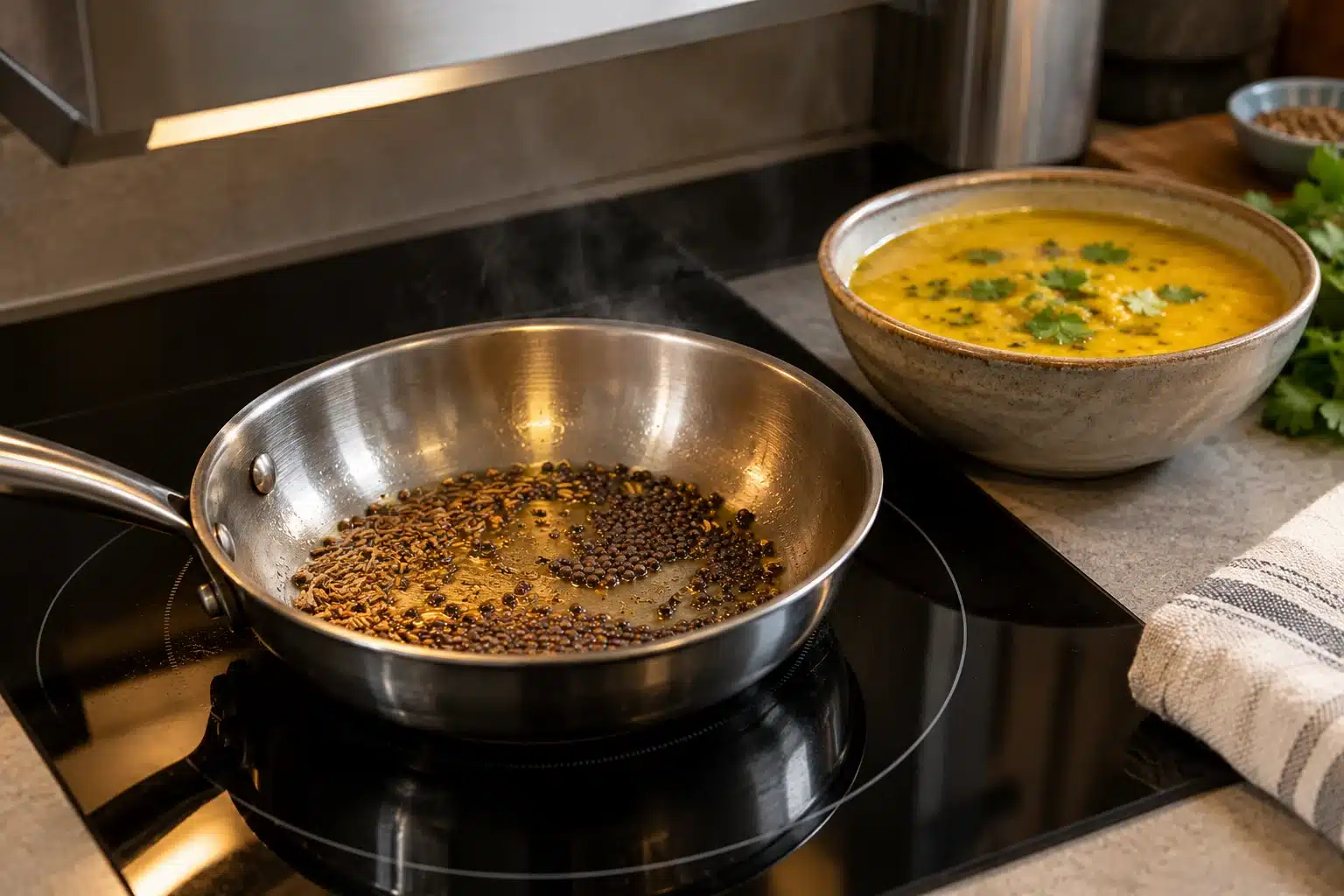
- Turn on extraction before the busiest frying stage, using the setting appropriate for the cooking. Keep it running afterwards according to the hood’s instructions. Milieu Centraal recommends strong extraction when frying and continued operation afterwards. You do not need to wait until the kitchen is visibly smoky.
- Use a pan that fits beneath the hood. A wide pan on a front burner can send much of its steam past a small extractor. Where the appliance instructions permit, a rear cooking zone may sit more directly under the hood. Keep handles safely positioned. Check whether cupboards, tall containers or a decorative cover obstruct the intake.
- Put lids on suitable simmering dishes, allowing room for steam to escape as the recipe requires. Do not cover a pan of hot frying oil as a casual smell-control measure. Plan the order so only one dish needs vigorous frying at a time. An onion base, a pot of dal and rice do not all need the highest heat.
Change the busy stages, not the identity of dinner
You can keep the cumin, ginger and garlic while making the cooking easier to manage.
Cook onions at a controlled heat rather than racing them towards dark brown. Stir so they colour evenly.
If you batch-cook a base, cool and refrigerate or freeze it appropriately in portions.
That lets you reheat only what you need for the next meal.
Choose ready-ground masalas when grinding spices is the awkward part of your routine. They still need careful cooking.
Do not assume a powder is odourless or that a whole spice is always stronger. Use the amount suited to the recipe and the actual blend.
A pressure cooker can make some dals convenient, but it is not a sealed smell-removal device. Steam is released during cooking or depressurising.
Follow the appliance’s instructions and position it where the released steam can be managed.
Choose dals that pressure-cook quickly for the meal you want, then use tested cooking guidance. Never block a valve or improvise a cover over it.
Oven cooking can move a suitable dish away from the frying pan. It does not eliminate the need for ventilation.
For some evenings, ready-to-cook mixes reduce preparation without changing what you want to eat. Check the directions before planning the meal around one.
A mix that still requires deep-frying may not simplify the part you find difficult.
Filters and surfaces deserve attention
A greasy hood cannot be assessed by its fan noise alone. Clean washable grease filters as the manufacturer specifies.
Replace carbon filters on the schedule for that model. Some are replaceable, some are regenerable, and the instructions differ.
Do not wash a filter simply because another model’s filter is washable.
Wipe splashes and remove food scraps after cooking. Let pans cool safely before cleaning them.
Wash tea towels and other fabrics that have absorbed cooking odours. Do not cover an ongoing ventilation problem with incense or a scented spray.
That adds another smell without fixing the air route. If you consider an air purifier, read what its filters are designed to do.
It does not replace ventilation or permission to alter a building system.
When the problem belongs to the building
A smell coming back through a vent when you are not cooking is worth reporting. Note when it happens and which vent it comes from.
Ask the landlord or VvE, the owners’ association, to check the shared system. Do not dismantle communal ducting yourself.
Photos of the hood model and a short record of the problem are more useful than guessing which neighbour caused it.
If a neighbour complains, ask about the timing and location. Explain the changes you have made and agree on a practical follow-up.
Keep the discussion about the air route and the actual disturbance. For an escalating dispute, ask your landlord or the Juridisch Loket where to get appropriate advice.
Do not rely on a blog article for a legal conclusion about a particular tenancy.
Keep the kitchen setup simple
Choose pressure cookers and kadais for your hob, portion size and appliance instructions. A pan you can control is more useful than the largest one on the shelf.
Our Indian cooking fats guide explains the flavour differences between common fats. The beginner’s spice-rack guide helps you buy a smaller, useful selection.
Panjab Supermarket offers same-day delivery across Nieuwegein, Utrecht, Leidsche Rijn, Vleuten, Maarssen, Zeist, Bunnik, IJsselstein, Vianen and Culemborg.
Delivery is a flat 2.49 euros and free on orders over 49 euros.
Two practical questions
Should I buy a new hood before contacting the landlord?
Ask how the current system is intended to work first. A replacement may need approval or may not solve a shared-duct fault.
Can I use a kitchen spray on a cooker hood’s filter?
Use only the cleaning method specified for that filter. An unsuitable cleaner can damage the material or leave residues.
Keep the food you enjoy and give the cooking air a proper way out.




You must be logged in to post a comment.