
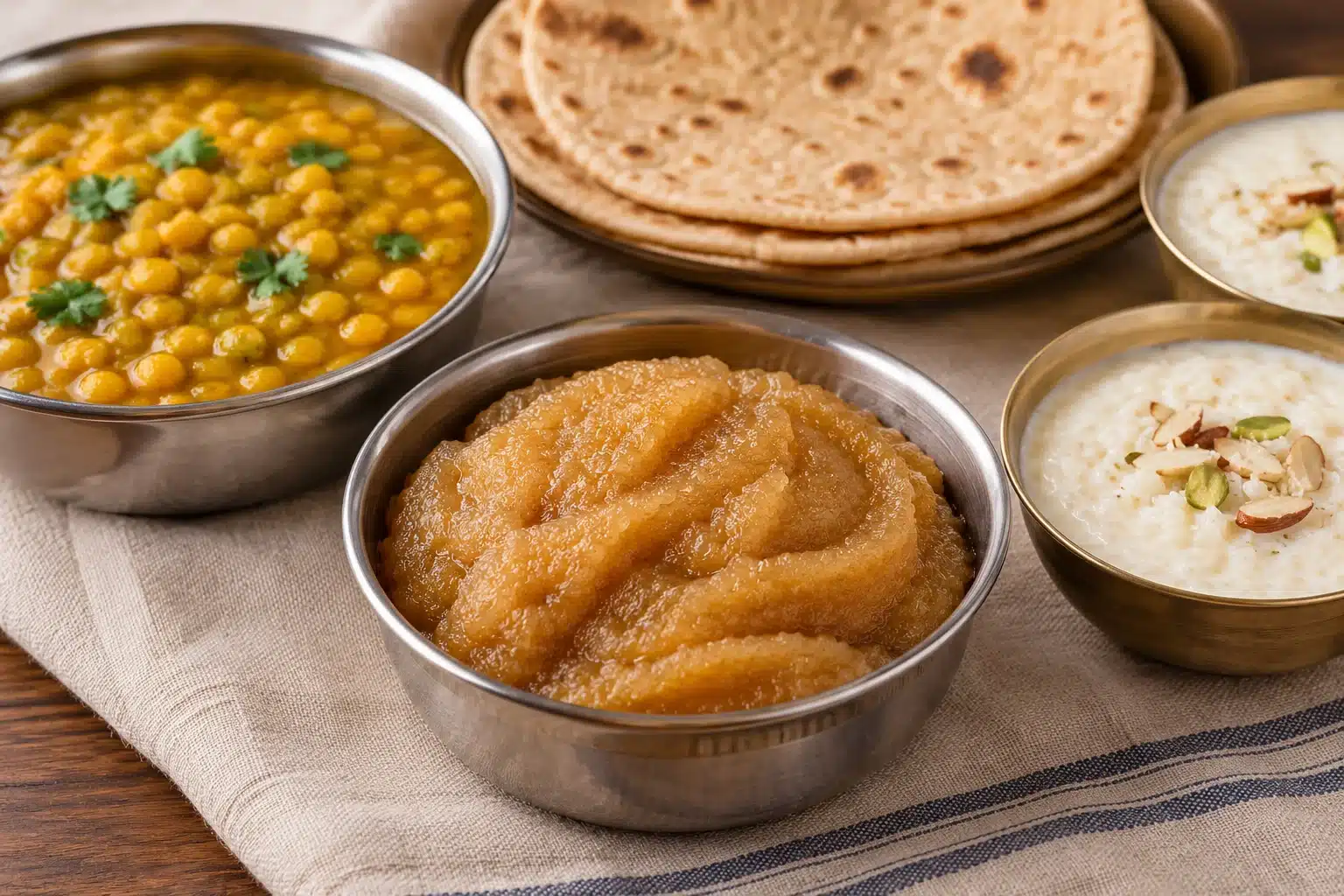
Langar at Home for Guru Nanak Gurpurab: Kada Prasad, Dal and Kheer
In short: Guru Nanak Gurpurab 2026 falls on Tuesday 24 November. For a meal at home, kada prasad, a simple dal and rice kheer offer familiar preparations. The kada prasad recipe uses equal cup measures of atta, ghee and sugar with three cups of water, taking about 30 minutes for six servings.
A pot of dal and a stack of rotis can make a generous table without elaborate decoration.
Around Gurpurab, the food also gives families a practical way to talk about sharing and seva, or service.
Langar is the free community kitchen and meal associated with the gurdwara. Cooking related dishes at home can be meaningful, but it is not a replacement for the community institution or a claim to reproduce every gurdwara’s practice.
Check the local programme
The 2026 Guru Nanak Jayanti calendar gives Tuesday 24 November for Gurpurab. A gurdwara may hold a programme on a nearby day or across several days.
Use the institution’s own announcement before planning a visit. Do not assume a timetable from another country applies to the Netherlands.
If you are new to visiting, ask what to expect. The Sikh Coalition’s visitor guide explains that attendees cover their heads and remove shoes as directed.
Follow the local gurdwara’s guidance, including its arrangements for the prayer hall and langar.
A respectful question is better than copying a gesture you do not understand. Do not photograph people or the programme without checking whether that is welcome.
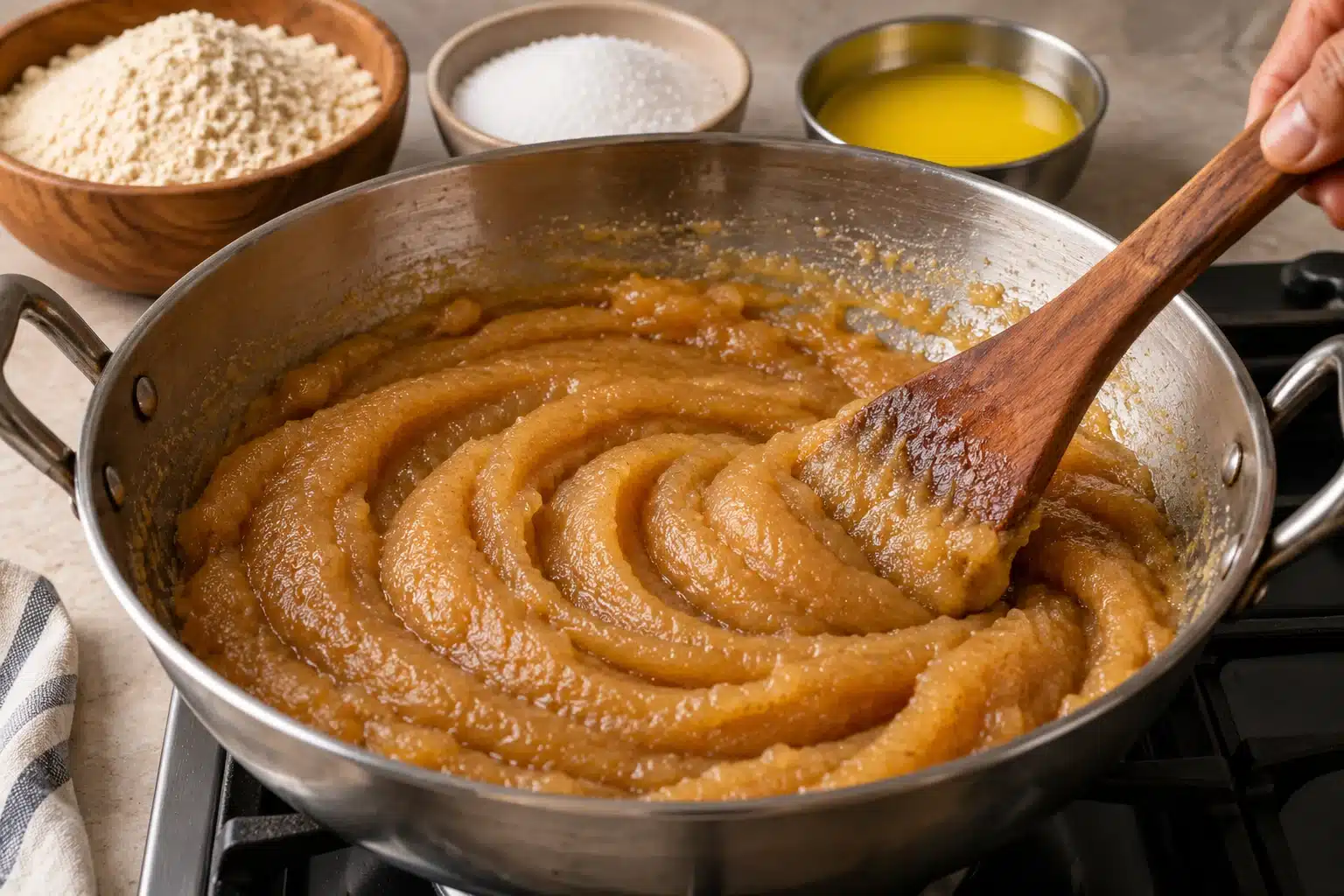
Kada prasad: measure before you heat the pan
Kada prasad, also written karah prasad, is a preparation of wholemeal wheat flour, ghee, sugar and water. In a gurdwara it is prepared and served within religious practice.
The home method below is a cooking guide, not instructions for conducting that practice.
Use a heavy pan and allow yourself time to stir without interruptions.
The recipe follows the measured version from Dassana Amit. It takes about 5 minutes to prepare and 25 minutes to cook, making six servings.
Use a 250 ml measuring cup consistently. Equal cup measures do not mean equal weights.
A cup of flour and a cup of sugar weigh different amounts.
Ingredients
- 1 cup atta, about 120 g
- 1 cup sugar, about 200 g
- 1 cup ghee
- 3 cups water
Choose chakki atta for kada prasad, checking that it is the flour your recipe requires. Use desi ghee according to the measured formula.
This is not the moment to combine different ratios from several recipes.
Method
- Heat the sugar and water together in a saucepan, stirring until dissolved. Bring the solution to a boil, then take it off the heat.
- Meanwhile, melt the ghee in a heavy pan over low heat and stir in the atta. Keep stirring so the flour colours evenly.
- The mixture should become a deep golden shade and smell toasted. Dark patches on the base are a sign to attend to the heat and stirring.
- Add the hot sugar solution carefully in two stages. Stand clear of the steam and spluttering.
- Continue stirring until the mixture thickens, comes together and leaves the sides of the pan.
Serve warm. Do not leave the pan at a critical stage to answer the door.
If children are helping, let them measure the dry ingredients away from the hot cooking area. Hot fat and sugar water need an adult’s full attention.
A simple dal for the home table
Maa di dal is commonly associated with whole urad, or black gram. Do not assume a bag of another dark pulse is the same ingredient.
The stock check behind this plan did not find whole urad available. Rather than promise that version, choose a familiar recipe using chana dal or another clearly identified pulse.
Look for chana dal and other langar staples and select the recipe before buying. Use its soaking time, water quantity and cooking method.
A pressure-cooker recipe cannot be translated into a saucepan cooking time by guesswork. Follow the cooker manufacturer’s directions when using pressure.
Keep the dal uncomplicated if you are also making kada prasad and kheer. A plain base with a separately prepared tadka, the spice tempering, lets you organise the cooking in stages.
Do not label one home recipe as what every gurdwara serves. Our guide to Indian lentils and dals explains the ingredient differences when labels are unfamiliar.
Rice kheer for five small servings
Kheer slowly cooks rice in milk until the grains soften and the liquid thickens. This version is based on Dassana Amit’s measured rice kheer recipe.
Allow 20 minutes for preparation, including soaking, and about 30 minutes for cooking. The recipe makes five servings.
Keep the rice grains and the pan’s actual progress in view rather than stopping at the clock alone.
Ingredients
- 1/4 cup basmati rice
- 1 litre whole milk
- 6 tablespoons sugar, adjusted to taste
- 1/2 teaspoon ground green cardamom
- A pinch of saffron, optional
- 1 tablespoon raisins, optional
The recipe uses basmati; it does not require buying a separate short-grain rice. Choose the rice shelf for kheer ingredients with the actual recipe in hand.
Optional nuts can be omitted. Do not add them automatically when cooking for people whose dietary requirements you have not checked.
Method
- Rinse the rice and soak it for 15 to 20 minutes. Warm the milk in a heavy pan, stirring to keep it from catching.
- Drain the rice and add it when the milk comes to the boil. Simmer gently, stirring regularly.
- Add the sugar when the rice is partly cooked. Continue until the grains are soft, then add cardamom and optional saffron.
- The milk should thicken around the rice. Stir in optional raisins at the end.
- Remember that kheer thickens further as it cools. Serve warm or refrigerate appropriately for a chilled serving.
- Use refrigerated leftovers within the source recipe’s 1 to 2 day guidance.
A kheer mix for a quick batch is another option. Follow that packet rather than adding its powder to this recipe without adjusting the quantities.
The milk and sugar requirements can differ. The cooking-fats guide can help with ingredient terminology, but it does not turn oil into the same traditional preparation as ghee.
Taking ingredients or offering seva
Contact the gurdwara before bringing cooked food or large grocery quantities. Ask what is needed, in which form, and when it can be received.
Unopened atta, dal, sugar or ghee may be useful, but the kitchen’s current needs come first. A duplicate donation can create storage work rather than help.
Ask about volunteering if you would like to contribute time. Follow the kitchen team’s instructions on hygiene, tasks and serving.
Do not assume visitors should arrive with a finished dish. The same practical respect applies at home: ask what the host needs before adding another pot to the table.
Shop for the recipes you have chosen
Count your guests and scale a tested recipe rather than guessing a large batch. Check pan size and fridge capacity before multiplying milk-based dishes.
Prepare the ingredients first so you can concentrate on the stove.
Panjab Supermarket offers same-day delivery across Nieuwegein, Utrecht, Leidsche Rijn, Vleuten, Maarssen, Zeist, Bunnik, IJsselstein, Vianen and Culemborg.
Delivery is a flat 2.49 euros and free on orders over 49 euros.
Two practical questions
Does equal parts for kada prasad mean weighing out the same number of grams?
Not in the cup-based recipe above. Use the specified cup measures and retain their different ingredient weights.
Should I take homemade kheer to a gurdwara without asking?
Contact the kitchen team first. They can tell you whether cooked food is accepted and what storage or delivery arrangements are needed.
Cook with care, and ask where your help will be most useful.


You must be logged in to post a comment.